

The BMW M2 G87 has one of the boldest designs in the modern M lineup. Its wide stance, squared surfaces, and large cooling openings already give the car a strong visual foundation.
That is exactly why the G87 responds so well to aero upgrades. The body already has clear edges and visual zones, so parts like front lips, side skirts, diffusers, and spoilers tend to feel natural rather than forced.
The real challenge is not finding parts. It is knowing what to upgrade first, what actually changes the car, and how to build an aero setup that feels cohesive from front to rear.
Why the BMW M2 G87 Is a Great Platform for Aero Upgrades
The G87’s body design naturally accommodates aerodynamic components.
The front bumper has pronounced lower edges and strong intake shapes, which makes front lips and splitters look intentional rather than tacked on. The side profile has enough tension in the body lines that side skirts can visually lower the car without feeling exaggerated. At the rear, the bumper has enough structure to support a diffuser or rear aero attachment without overwhelming the tail.
BMW’s own design direction reinforces this idea. The official M Performance Track Kit for the M2 includes:
-
an adjustable carbon splitter
-
wheel-arch aero elements
-
a swan-neck rear wing
BMW states that these components were developed in the wind tunnel and tuned to work together, emphasizing aerodynamic balance between the front and rear axles.
That already signals something important: the G87 is not just a styling platform for aero parts — it is a car where coordinated aerodynamic upgrades make real sense.

What Should You Decide Before Upgrading the G87 M2?
Before browsing parts catalogs, decide what kind of build you want.
A street-focused G87 usually benefits from subtle pieces that sharpen the design without hurting everyday usability. A weekend or show build can tolerate deeper lips and stronger visual elements. A track-focused car is different again, where aerodynamic balance and cooling matter more than pure styling.
You should also decide whether your goal is OEM+ or track-inspired.
An OEM+ build typically follows the factory proportions closely: a front lip that adds definition rather than depth, side skirts that extend the lower bodyline without exaggeration, and a rear spoiler that looks like it could have come from BMW itself.
A track-inspired setup usually pushes further with a deeper splitter, more aggressive skirts, a pronounced diffuser, and possibly a wing.
Neither approach is automatically better. What matters most is having a clear direction. The difference between a clean G87 build and an awkward one usually comes down to consistency.
What Should You Upgrade First on a BMW M2 G87?
For most owners, the front lip remains the best first aero upgrade.
It changes the car immediately. The front bumper gains more definition, the nose appears lower, and the overall stance becomes more purposeful without requiring a full transformation.
A typical upgrade sequence looks like this:
-
Front lip or splitter
-
Front trim details (intake surrounds)
-
Side skirts
-
Rear diffuser
-
Trunk spoiler or wing
This order works because it mirrors how people visually read a car: the front creates the first impression, the side connects the design, and the rear finishes the visual story.
Following that sequence also helps avoid a common problem — an aggressive front end paired with a completely stock middle or rear.

Quick G87 Aero Upgrade Priority
|
Upgrade |
Visual Impact |
Installation Difficulty |
|
High |
Easy |
|
|
Medium |
Easy |
|
|
Medium |
Medium |
|
|
Medium |
Easy |
|
|
High |
Hard |
For most street builds, starting with the first three upgrades already transforms the look of the car.
 Why the Front Lip Is Usually the Best First Aero Upgrade
The G87’s front bumper is complex and visually heavy. A good front lip helps organize that complexity.
It defines the lower edge of the bumper and visually lowers the car’s center of gravity. Even subtle lips can make the entire front end feel more deliberate.
For street builds, that usually means choosing a lip that adds shape without projecting too far forward. Deeper splitter-style pieces can look fantastic on more aggressive builds, but they introduce practical concerns like scraping and installation complexity.
BMW’s Track Kit illustrates this difference clearly. Its adjustable splitter is designed to work with cooling ducts and airflow management underneath the car — something most street lips are not intended to do.
Do Small Front-End Details Matter?
They do — but usually after the front lip is installed.
Carbon intake trims, duct accents, and similar pieces refine the bumper and make the nose feel more finished. BMW itself positions these components as complementary upgrades rather than primary visual changes.
The mistake many owners make is installing small details first while the main front edge still looks unfinished.
Once the lip is in place, those secondary pieces help the entire front end feel more cohesive and premium.

How Side Skirts Transform the G87 M2
Side skirts are often the upgrade that determines whether a build looks complete.
On the G87, they visually connect the front lip with the rear diffuser area. Without that middle link, the car can easily look front-heavy.
BMW’s M Performance catalog includes both side skirt extensions and small side spats for this reason. They sharpen the lower bodyline and carry the aero language from front to rear.
For most street builds, the best side skirts are the ones that extend the profile without hanging excessively low. Aggressive extensions can look great on lowered cars with matching aero, but they also raise the stakes for daily driving.
In many cases, tasteful restraint ages better than maximum aggression.
 What to Look for in a G87 M2 Rear Diffuser
The rear diffuser gives the G87’s tail more depth and structure.
It frames the exhaust area and breaks up the visual mass of the rear bumper, often making the car appear both wider and lower.
The real decision is not whether a diffuser looks good. It is how aggressive the rear should be compared to the rest of the car.
A dramatic diffuser paired with subtle front aero can make the rear feel too dominant. A very subtle diffuser may look unfinished if the front and sides have already been upgraded.
That is why upgrading front, side, and rear components in phases usually produces the best result.
 Spoiler or Wing?
For most street-driven G87s, a trunk spoiler is the more balanced option.
It sharpens the decklid line and complements both OEM+ and moderately aggressive builds.
A large wing is a different statement. Once a wing is installed, the rest of the aero setup often needs to become more serious as well.
BMW’s Track Kit shows this clearly: the swan-neck rear wing is paired with a large adjustable splitter and additional aero elements to maintain balance between the front and rear.
A wing should not be treated as an isolated upgrade — it changes the language of the whole build.
Piece by Piece or Full Aero Kit?
Both approaches can work.
Upgrading piece by piece spreads out the cost and gives you time to see what the car actually needs visually. Many G87 owners discover that a lip, skirts, diffuser, and small spoiler already create the look they wanted.
A full aero kit has a different advantage: cohesion.
The surfaces, carbon weave, gloss level, and proportions usually match better when the parts were designed together. Some premium aftermarket brands, such as Revozport, follow the same philosophy by developing coordinated aero packages rather than isolated components.
For example, some manufacturers develop different aero packages for different use cases. Revozport offers both a street-focused G87 body kit designed to enhance the car’s daily presence, and a more aggressive track-oriented G87 body kit developed with motorsport styling and higher downforce in mind.
This kind of separation reflects how many G87 owners approach upgrades — choosing between a refined OEM+ style for road use or a more serious aero setup inspired by track builds.
Even if you are not buying a complete kit, the principle still applies: cohesive aero almost always looks more expensive than random aero.
Where Carbon Fiber Fits Into a G87 M2 Aero Build
Carbon fiber is not mandatory, but it has become the defining material for many premium G87 builds.
BMW uses carbon-fiber-reinforced plastic extensively across its M Performance exterior parts, highlighting the exposed weave and clear-coat finish as part of the appeal.
Many aftermarket aero brands, including Revozport, follow a similar front-side-rear carbon strategy when designing upgrades for BMW G87.
That said, carbon fiber only works visually when the whole build stays consistent. Mixing different weave patterns or gloss levels can quickly reduce the premium effect.
On the G87, carbon looks best when it reinforces a clear theme — front lip, intake trim, side skirts, diffuser, and spoiler that feel like part of the same visual sentence.
Common BMW M2 G87 Aero Upgrade Mistakes
Many G87 builds go wrong not because the parts are bad, but because the upgrades were installed without a plan.
A common mistake is installing an aggressive front splitter while the rest of the car remains visually stock. Another is choosing a large rear wing without matching front aero.
Mixing multiple carbon-fiber styles can also create problems. Different weave patterns or gloss levels can make the car look less cohesive rather than more premium.
Ground clearance is another overlooked issue. Some splitter designs look fantastic in photos but become frustrating on daily-driven cars that regularly encounter speed bumps or steep ramps.
A staged upgrade approach usually avoids these problems.
Example G87 Aero Build Paths
|
Build Type |
Key Aero Parts |
When It Works Best |
|
OEM+ Street Setup |
Front lip, side skirts, rear diffuser, small trunk spoiler |
Ideal for daily-driven G87 builds that want sharper styling without hurting practicality. |
|
Aggressive Street / Show Setup |
Carbon splitter, extended side skirts, deep diffuser, carbon trunk spoiler |
Emphasizes visual drama while remaining usable on the street or at shows. |
|
Track-Inspired Setup |
Adjustable splitter, side aero extensions, functional diffuser, rear wing |
Focuses more on aerodynamic balance and airflow management. |
What to Check Before Installing G87 Aero Parts
Fitment should always come first.
BMW’s accessories store recommends VIN-based part selection to ensure compatibility. Even outside the OEM catalog, that mindset still applies.
You should also think about ownership, not just installation day. Quality mounting hardware, stable fitment, and durable finishes matter far more than flashy product photos.
Finally, protect what you install. The G87’s front end takes a lot of road debris, which is why many owners add paint protection film (PPF) to exposed carbon lips and leading edges soon after installation.
A Smart Street Upgrade Path
For most street-driven G87 M2s, the most balanced path is simple.
Start with a front lip. Add small front details if the nose still needs definition. Install side skirts to connect the profile. Follow with a rear diffuser, then finish with a trunk spoiler if the rear still feels too conservative.
Many owners find that once the front, side, and rear lower sections are resolved, the car already looks dramatically more complete.
The goal is not to add the most parts.
It is to add the right parts in the right order.
Final Thoughts
The best BMW M2 G87 aero build is not the loudest one — it is the one with a clear direction.
If your goal is OEM+, choose parts that sharpen the factory lines while keeping the car usable. If you want something more aggressive, build toward balance rather than isolated drama.
BMW already gave the G87 strong design foundations. Your job is simply to decide which lines to emphasize and how far you want the design language to go.
Once you approach the car that way, building a cohesive G87 aero setup becomes much easier.
Explore Our Full Range of Tuning Accessories

BMW M2 G87 / M3 G80 / M4 G82 Splitter End Plate - Driver Side
$360
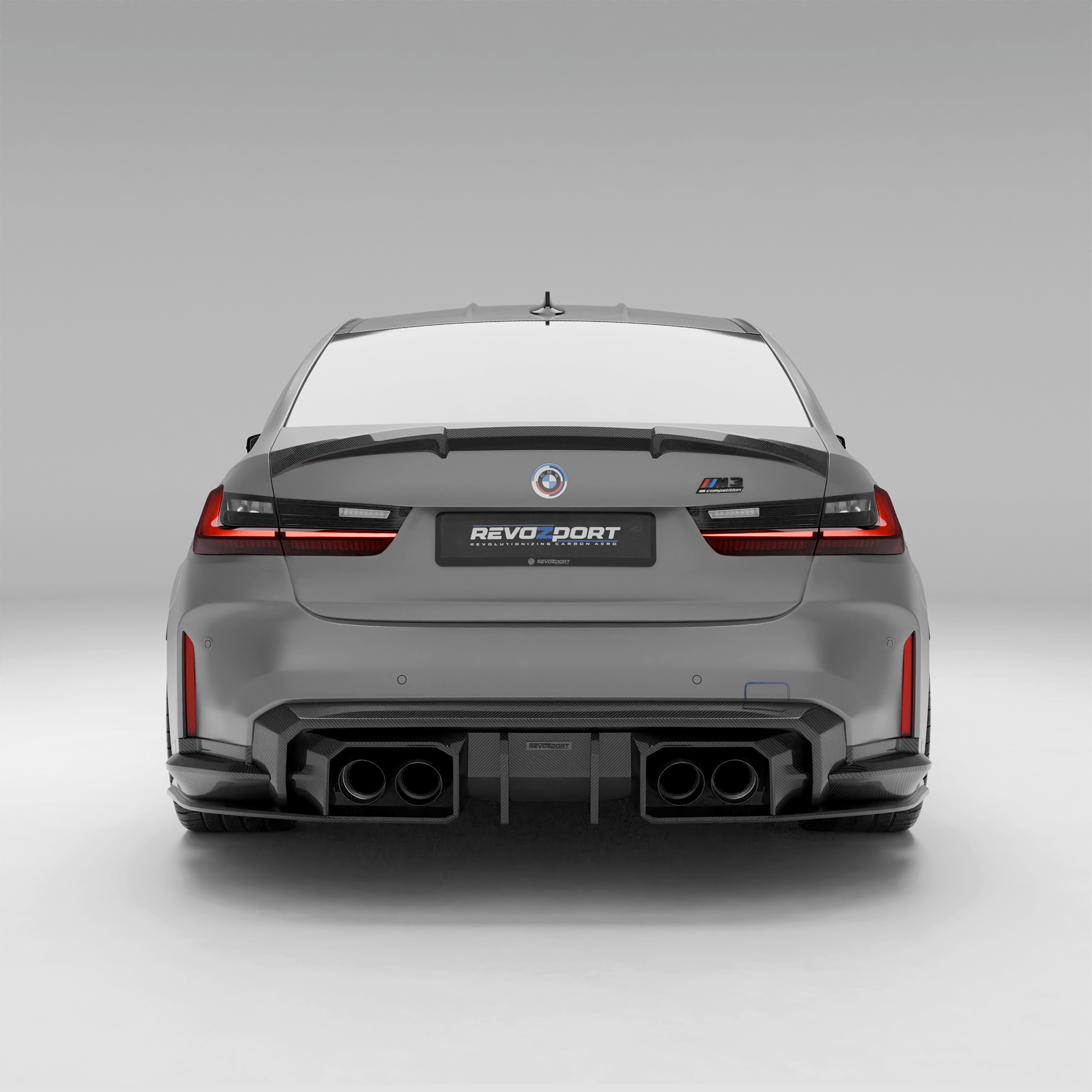


BMW M2 G87 / M3 G80 G81 / M4 G82 Stainless Steel Tailpipe-Black
$425


BMW M2 G87 Carbon Fiber Aero Front Bumper Block-Off Plates
$825


BMW M2 G87 Carbon Fiber Aero Hood & Strakes
$4,905


BMW M2 G87 Carbon Fiber Aero Side Skirts
$1,725


0 comments